Apron: The part of the stage closest to the audience. The area of the theatre that is located between the curtain and the orchestra pit.
Arbor: The part of the counter-weight system that holds steel weights. The weight of the arbor must match the weight of the batten. See also Fly Rail and Batten.
Batten: the pipes above the main stage that are the part of the counter-weight system on which scenery and lights are hung. See also Fly Rail and Arbor.
Blocking: Direction given to actors as to where they should stand or move to during the course of the play.
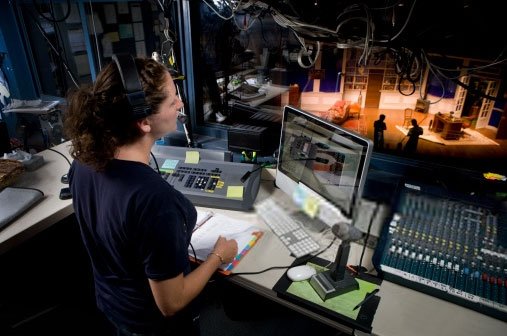
Booth: Where the stage manager and usually sound and light crews are during the production.
Bump: The lights or sound on stage come on or go off without any delay, just like a switch. Also called a “zero count fade”. See also Fade.
Call Board: The bulletin board where everyone signs in and notices are posted (also known as sign-in board)
Call Time: The time that all actors and crew are expected to be at the theater.
Costume Parade: See Dress Parade.
Crew Watch: The rehearsal set aside for all of the departments to come and watch the show so they have an overall understanding of how their crew fits into the “grand scheme of things”.
Cue to Cue run-through: A rehearsal of the play, usually done during Dry Tech, where you start at the beginning of the play, miss out long bits of dialogue where essentially nothing technical happens (eg no cues) and then skip forward to where something does happen, be it a lighting cue, sound cue, an actors entrance, a sequence where an actor has to get off to do a quick change and then back on again. It will involve all important happenings such as a song, a battle or a difficult sequence with props.
Curtain Call: When the actors come out at the end of the show to take their bows.
Curtain Warmers: The lights that are focused on the curtain so that the audience has something to look at before the show starts.
Curtain: Either the large drape that obscures the stage from an audience or a time when the show will start.
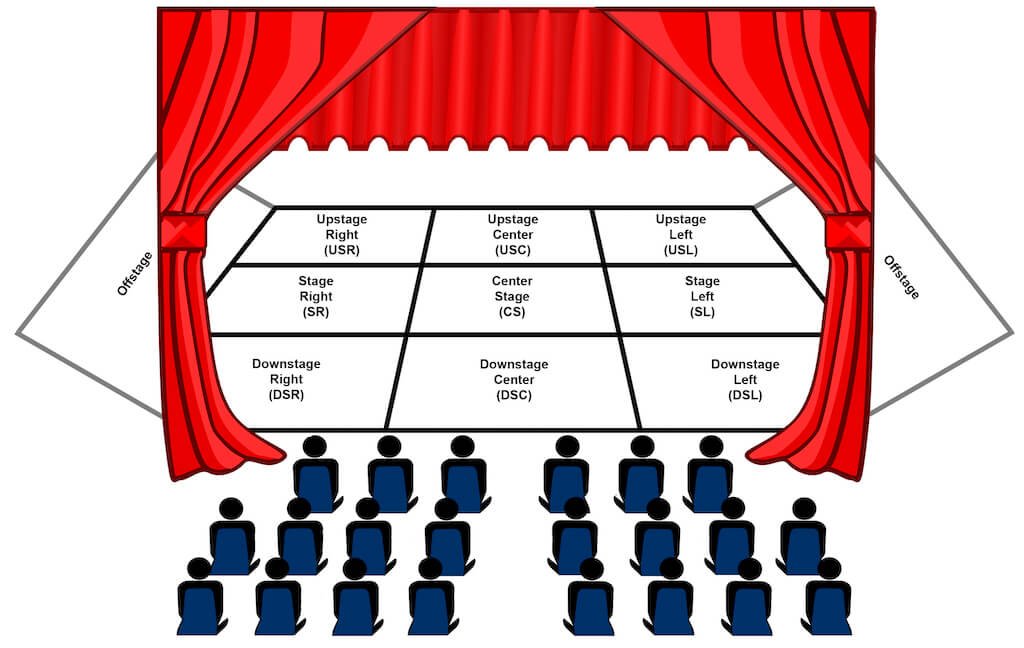
Down stage: The part of the stage that is closest to the audience. It is called “down” because some theatre stages are sloped (“raked”) towards the audience, so it literally is the lowest point of the stage. In the case of a thrust stage, where there is audience on three sides, then down stage is opposite to the side where the audience isn’t sitting (effectively the front of the set). If the audience is on all four sides, down stage is typically closest to the booth where the stage manager sits during the show. See also stage left, stage right, and up stage.
Dress Parade: When the actors dress up in their brand new costumes and stand in front of the Costume Designer and the Artistic Director to see how they look.
Dress Rehearsal: A rehearsal, typically within the last week before a show opens, where the actors will wear their costumes during the run of the show.
Dry Tech: The first technical rehearsal, without actors (therefore, without costumes and props) so that lights, sound, and running crew can rehearse their parts. Usually held the Saturday morning or Friday night before opening night.
Fade: A light intensity or sound level change over a set number of seconds. For example, the lights on stage may fade to a blackout over 5 seconds. See also Bump.
Fire curtain: A large sheet of material that, in case of a fire emergency, comes down up stage of the proscenium and completely blocks the stage from the audience. This ensures that fire does not spread to the audience if there is a fire onstage (or vice versa).
Fly Rail: the part of the counter-weight system where the rope locks are located. Also, the area where the Fly operator stands. See also Batten and Arbor.
Gel: A piece of tinted plastic film that is attached to the front of a lighting instrument to make the light on stage a certain color. The film is inserted into a gel frame to properly secure it to the instrument.
Gobo: A piece of metal with a pattern cut out of it, inserted inside a lighting instrument to make a pattern of light on stage. Gobos can be also made of glass, plastic, or metal.
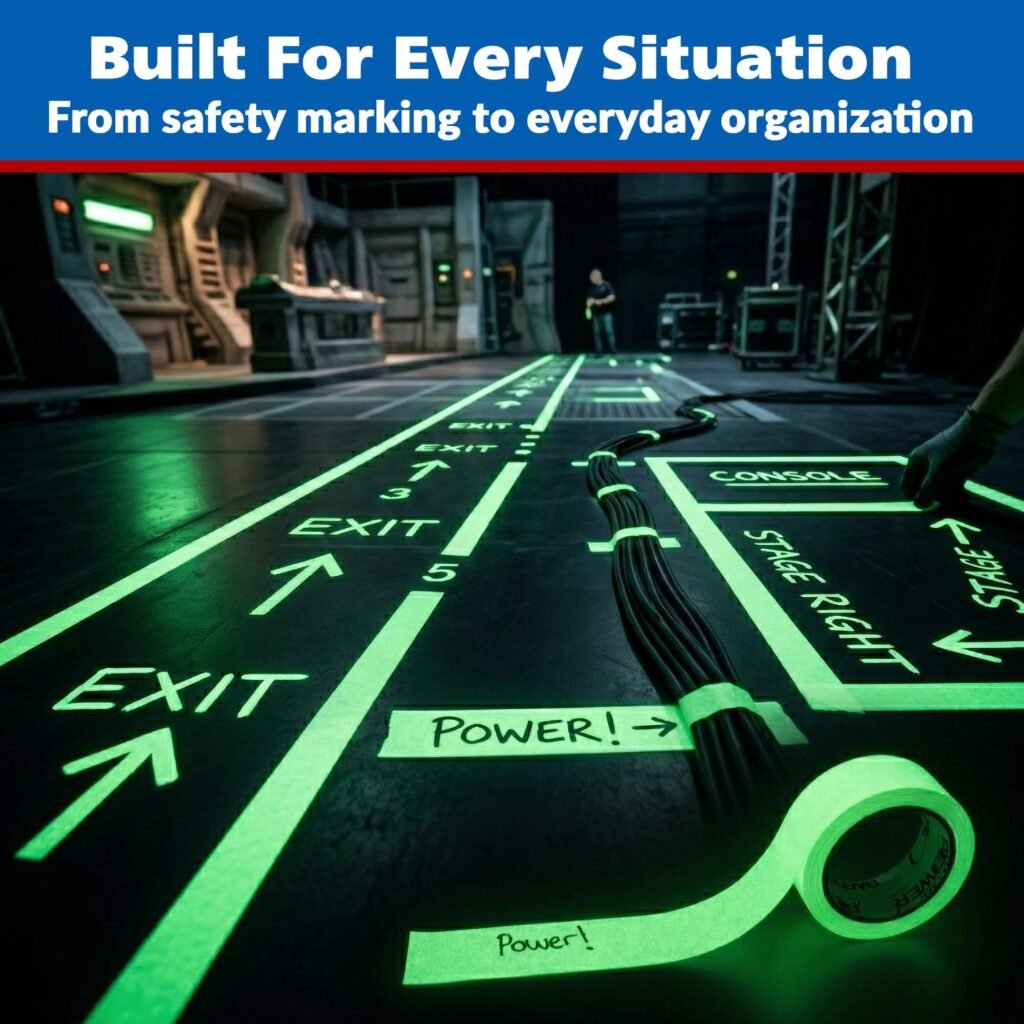
Glow Tape: light sensitive tape that will glow when the lights go out.
House: The auditorium where the audience sits when they watch the show.
On-Book: A role typically done by the ASM, AD or Stage Manager. They follow along in the script as actors say their lines, ready to give a line or correct a mistake. The actors themselves are “off book”.
Paper Tech: A meeting of the Director, Stage Manager, designers and, often the crew chiefs. This is where all the light changes, sound changes, props movements, fly movements and other backstage activities that occur at specific points are precisely determined and are documented in the Stage Manager’s script and by each designer and crew chief.
Photo Call: On main stage, the day when all crew members and actors are to report to have their pictures made for the program or archives.
Pit: Where the orchestra sits.
Places: When actors and technical crews have been told that the production will start within five minutes and they are to be in place and ready.
Plaster line: The plaster line is the most upstage point of the proscenium opening. It is where the proscenium meets the fire curtain smoke pocket.
Preview: Final dress rehearsal when an audience has been invited (at no charge) to see the show. Each cast and crew member receives two tickets to a Preview for your family. Its one of the perks of working a show!
Production Meetings: The weekly gathering of all departments (lights, costumes, props…) to discuss how preparations are going toward opening night.
Props: Those things that an actor works with during the production that are not costume pieces.
Proscenium: the frame through which the audience views the stage.
Running Crew: The technical crew who move furniture on and off the stage, bring in backdrops and other large set pieces.
Running lights: The hidden lamps that have been set up to provide some light backstage so that actors and technical crews can see a little bit. Usually they have a blue “gel” covering them so that the light is not noticed by the audience.
Set Dressing: The things that make the set look real but are never touched or moved by an actor.
Speed-Through: The final rehearsal without sound, lights, running crew when the cast sits around a table and says their lines as rapidly as possible (but with emotions) in order to check for line accuracy and to bring the tempo of the show up.
Spike Marks: Tape (or sometimes paint) markings on the stage that indicate where props, furniture, and sometimes actors, are to be placed.
Stage left: The left side of the stage as seen by the actors looking out at the audience. From the audience’s perspective, stage left is on the right. See also stage right, up stage, and down stage.
Stage right: The right side of the stage as seen by the actors looking out at the audience. See also stage left, up stage, and down stage.
Strike: When you tear down the set, or you remove something (‘strike the ashtray’ means to take it off the stage)
Tech Week: The week before the show opens.
Techies: All those people who work on technical crews for a show.
Tops and Tails: A rehearsal similar to a cue to cue run-through where you only work (practice) the transitions between scenes.
Up stage: The part of the stage that is furthest from the audience. It is called “up” because some theatre stages are sloped (“raked”) towards the audience, so it literally is the highest point of the stage. If the audience is on all four sides, up stage is typically furthest from the booth where the stage manager sits during the show. See also stage left, stage right, and down stage.
Wet Tech: The first technical rehearsal that includes actors and all departments (except costumes). This rehearsal is more for technical crews than it is for actors, so there may be stopping and starting. Usually held in the afternoon after Dry Tech on the Saturday before opening night.
Source: “Theatre Jargon – Raleigh Little Theatre.” Raleighlittletheatre.org, raleighlittletheatre.org/get-involved/volunteers/theatre-jargon/.